

Welcome to Edition 90!!!
The Ad Stack is now ranked #7 in the Satire category and # 7 in Advertising per Inbox Reads.
Dribs and Drabs
"Slop" Named Word of the Year
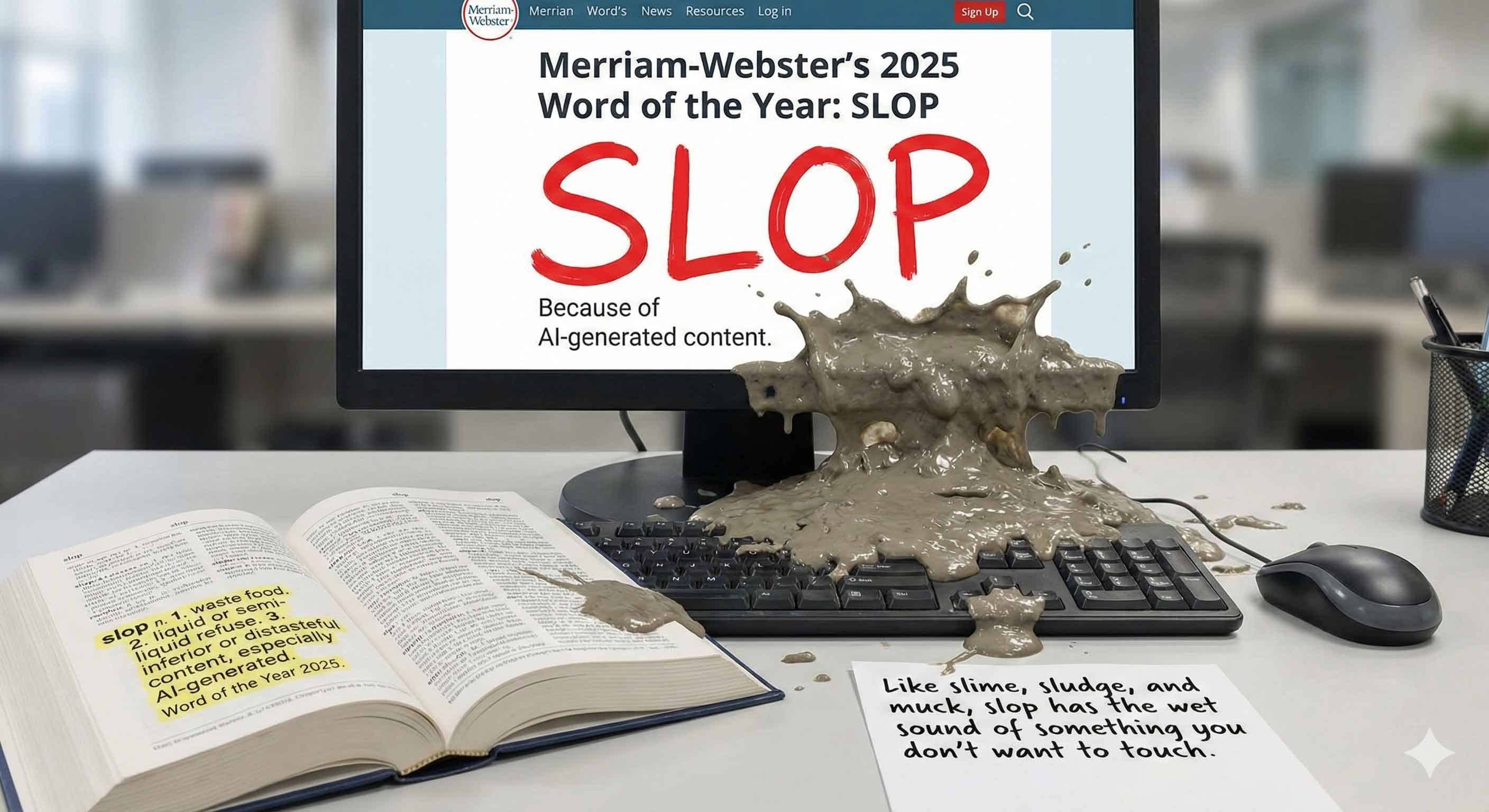
Every image I rendered was gross.
Merriam-Webster chose "slop" as 2025's word of the year specifically because of AI-generated content. "Like slime, sludge, and muck, slop has the wet sound of something you don't want to touch," CNN wrote the editors. One artist created "Slop Evader," a browser extension filtering web searches to only show results from before November 2022—before ChatGPT's release.
TL;DR vibe:
The holding company world is in full reorg + AI-stack sprint mode. Mergers, platform launches, reshuffled agency brands, branding, major layoffs, re-branding, and big account wins/losses are all part of the playbook in 2026. It’s a weird mix of tech build-outs and shrinkage of old creative identities.
Sponsor:

Space is limited. No credit card. We want your feedback.
CES 2026 Headlines: A Calm, Reasonable Trade Show For an Industry That Has Absolutely Lost the Plot
Also, What will 2026 agency life look like?
CES is where the future is unveiled annually in Las Vegas, a city chosen specifically because no one will remember what happened there. It’s the Consumer Electronics Show, which in advertising terms means “a week-long press release hallucination where brands announce products that will be quietly deprecated by Q3.”
This year’s CES headlines were… familiar.
Comfortingly unhinged. A greatest-hits album of buzzwords performed by executives who definitely rehearsed saying “AI-powered” in the mirror.
Let’s begin …
1. “AI Is Embedded in Everything”
Yes. We know. So is microplastics. This is not automatically good.
Every holding company showed up with a slightly different version of the same slide:
WE Have Built An AI Operating System!!!
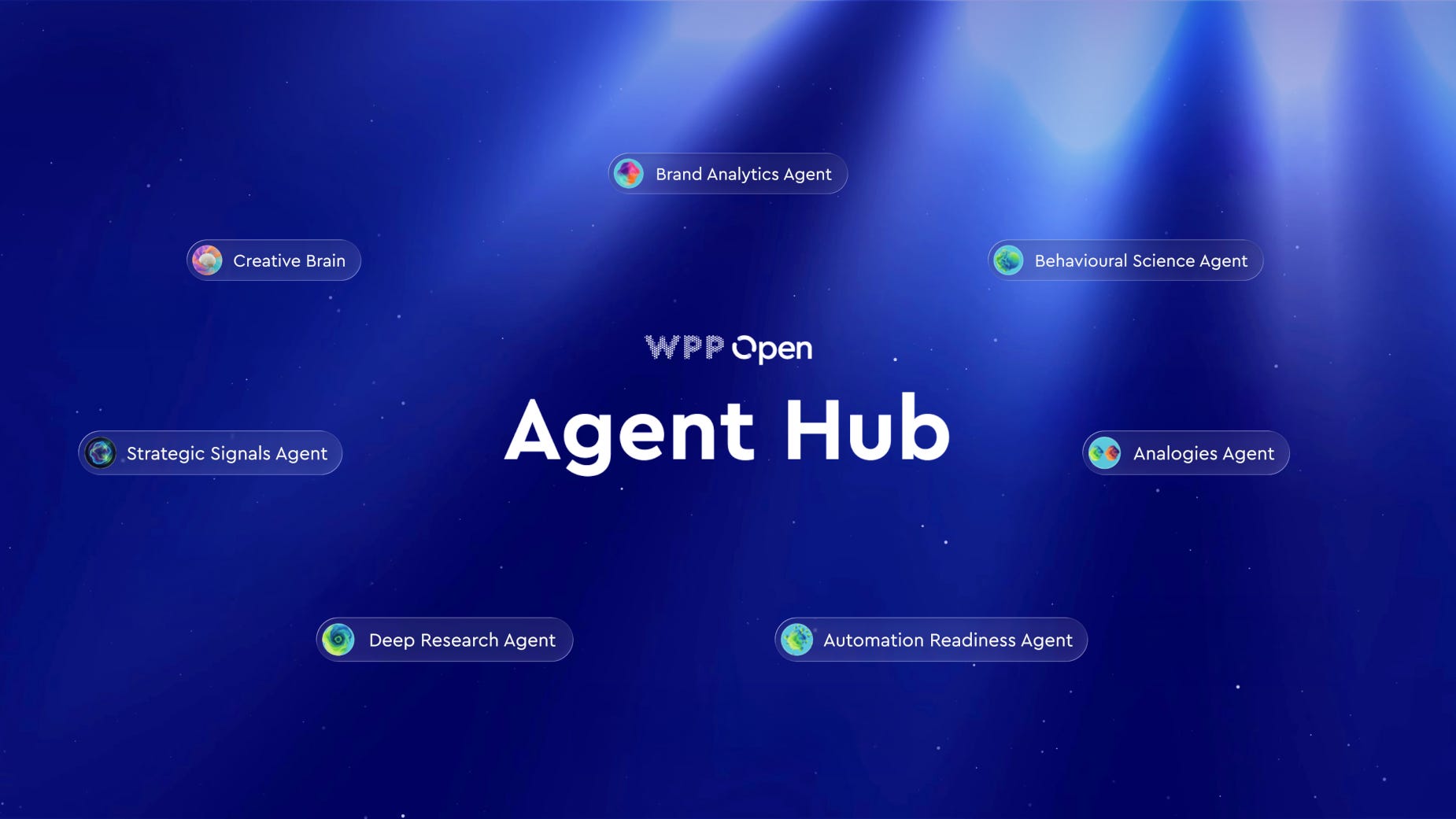
Omnicom. WPP. Publicis. Havas. Stagwell bought The Machine from Code & Theory** who has been Beta testing with other agencies. All proudly debuting platforms that promise to unify creativity, media, data, commerce, and probably your unresolved childhood issues into a single dashboard.
** C&T also did the rebranding for the Washington Commanders football team. Quite the diverse offering.
These platforms are always described as:
“End-to-end”
“Human-centered”
“Transformational”
They are never described as:
“Actually enjoyable to use”
“Finished”
“Not a reskinned middleware product with a new logo”
2. “Creativity at the Speed of Culture”
This headline appeared roughly 47 times, often next to a demo that took six minutes to load and featured a generative video of a person with a magical disappearing third arm.
Speed of culture, in practice, now means:
Auto-generate 10,000 variants
Test them against historical bias
Optimize toward the safest possible output
Declare victory
Win an award for bravery
Culture remains un-consulted.
3. “Hyper-Personalization at Scale”
Still undefeated as the most dangerous phrase in marketing.
CES demos proudly showed ads that adapt in real time to user behavior, location, mood, inferred intent, and whether Mercury is in retrograde. The promise: every consumer gets a message crafted just for them.
The reality: everyone gets the same beige nothing, rearranged slightly.
Personalization, as always, is extremely good at answering questions no one asked. “What if this banner ad knew you were tired?” Great. I am still not clicking it.
4. “The Death of the Traditional Agency Model”
This headline shows up every year at CES, like a seasonal flu.
The traditional agency model has allegedly died:
Because of AI
Because of creators
Because of in-housing
Because of consultancies
Because of platforms
Because of vibes
And yet, somehow, it keeps billing hours and showing up on org charts like a raccoon that refuses to leave the dumpster.
What has changed is the pitch. Agencies are now:
“AI orchestration partners”
“Creative systems designers”
“Operating model consultants who also do TikTok”
Everyone still makes decks.
5. “Creators Are the New Media Companies”
This one is actually true, which is why it made everyone uncomfortable.
CES was packed with creator economy panels where brands nodded earnestly while realizing, in real time, that a 23-year-old with a ring light has better audience trust than their entire content studio.
The subtext here: brands want creator authenticity without creator unpredictability. They want the voice, the vibe, the para social bond; just not the opinions, the labor leverage, or the fact that creators can leave.
Expect many AI-powered “creator simulators” to be announced before anyone asks whether that’s deeply cursed.
6. “Measurement Has Finally Been Solved”
Absolutely not.
Every CES claims to have cracked measurement. This year’s version leaned hard into attention metrics, emotion tracking, and “outcome-based” everything.
Which is great, except:
Attention is not intent
Emotion is not persuasion
Outcomes are still defined after the fact
But the dashboard looks incredible.
7. “AI Will Free Humans to Be More Creative”
The most optimistic headline of all, delivered directly into a room full of people quietly wondering if their job will exist next year.
AI will free humans. Yes, mostly from:
First drafts
Versioning
Mood boards
Any sense of authorship
It will also free management from needing to understand how creative work actually happens. Which feels… related.
The unspoken CES truth: AI isn’t replacing creativity. It’s replacing patience. And patience was doing a lot of work.
8. The Real CES Story (As Always)
The real headline isn’t any single announcement. It’s the collective posture.
Advertising showed up at CES desperate to look like tech, while tech showed up desperate to look human. Everyone met in the middle and called it innovation.
The holding companies want to be platforms. Platforms want to be storytellers. Brands want certainty. Consumers want less of all of this.
CES didn’t reveal the future. It revealed the coping mechanisms.
And the biggest headline, the one no one put on a slide?
9. “Nobody Knows What The Final Form of This Is, But The Budget Has Already Been Approved.”
Same time next year.
What Agency Work Feels Like Now
Versus Three Years Ago
Three years ago, agency work felt like a job. A chaotic job, sure, but one with meetings you could prepare for, decks that survived more than one revision, and a vague sense that tomorrow would resemble today.
Now it feels more like being dropped into a live beta test run by your most confident client, your least technical coworker, and an algorithm that learned strategy by taking a free LinkedIn online course. Same title. Same deadlines. Entirely different physics.
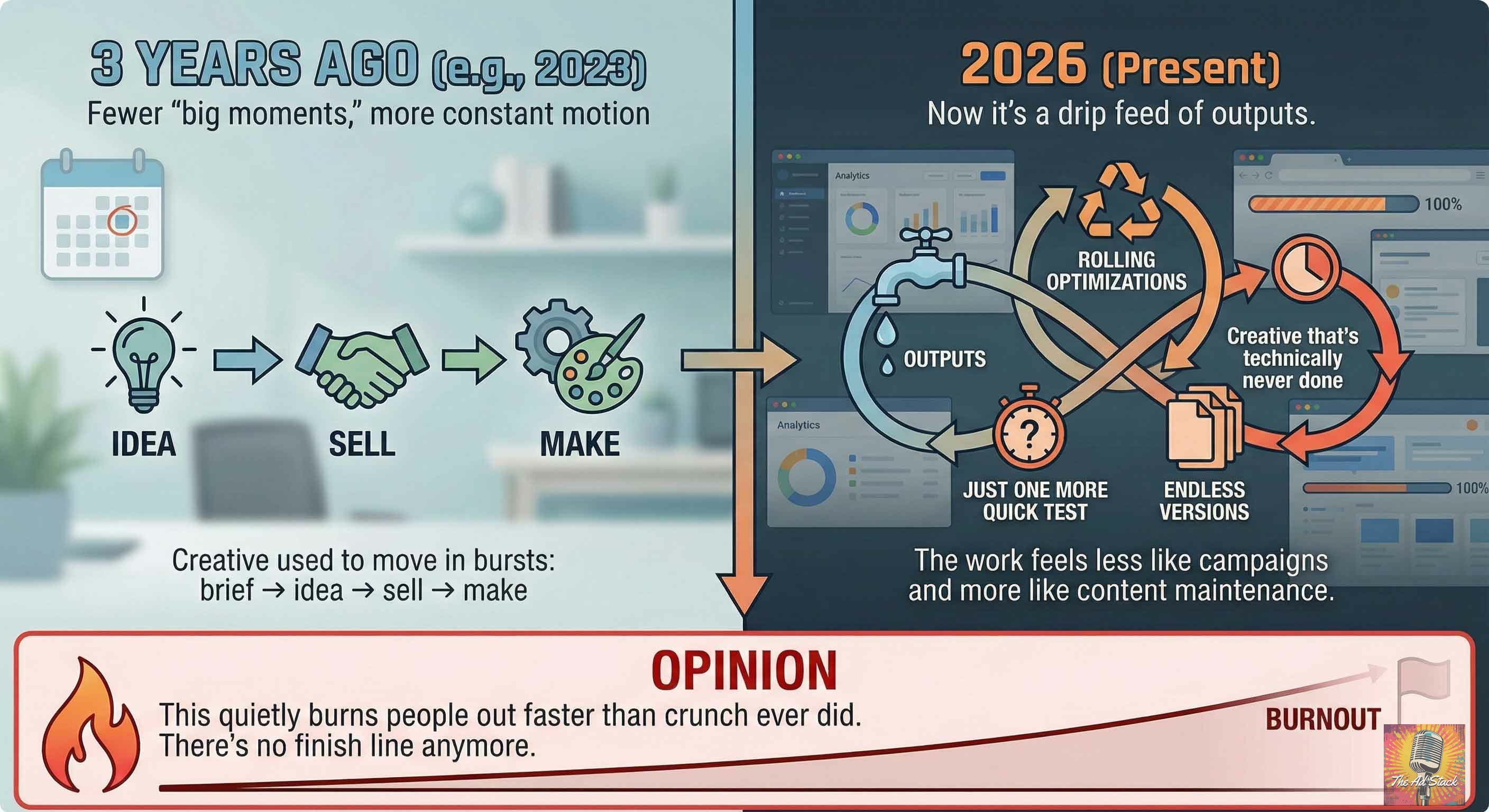
1. Fewer “big moments,” more constant motion
Creative used to move in bursts: brief → idea → sell → make.
Now it’s a drip feed of outputs.
Endless versions
Rolling optimizations
“Just one more quick test”
Creative that’s technically never done
The work feels less like campaigns and more like content maintenance.
Opinion: This quietly burns people out faster than crunch ever did. There’s no finish line anymore.
2. Juniors skipped the fun part; AI ate the entry-level creative ladder.
Mood boards? Generated.
First drafts? Generated.
Explorations? Generated.
Juniors are now asked to edit tastefully before they’ve had time to develop taste. Seniors are suddenly doing more hands-on work again — not because they want to, but because “someone has to QA the robot.”
Opinion: We’re creating a weird hollow middle where people jump from intern to “AI wrangler” without learning how ideas are born.
3. Strategy quietly got louder.
Because AI can make anything, clients now ask: “Why this?”
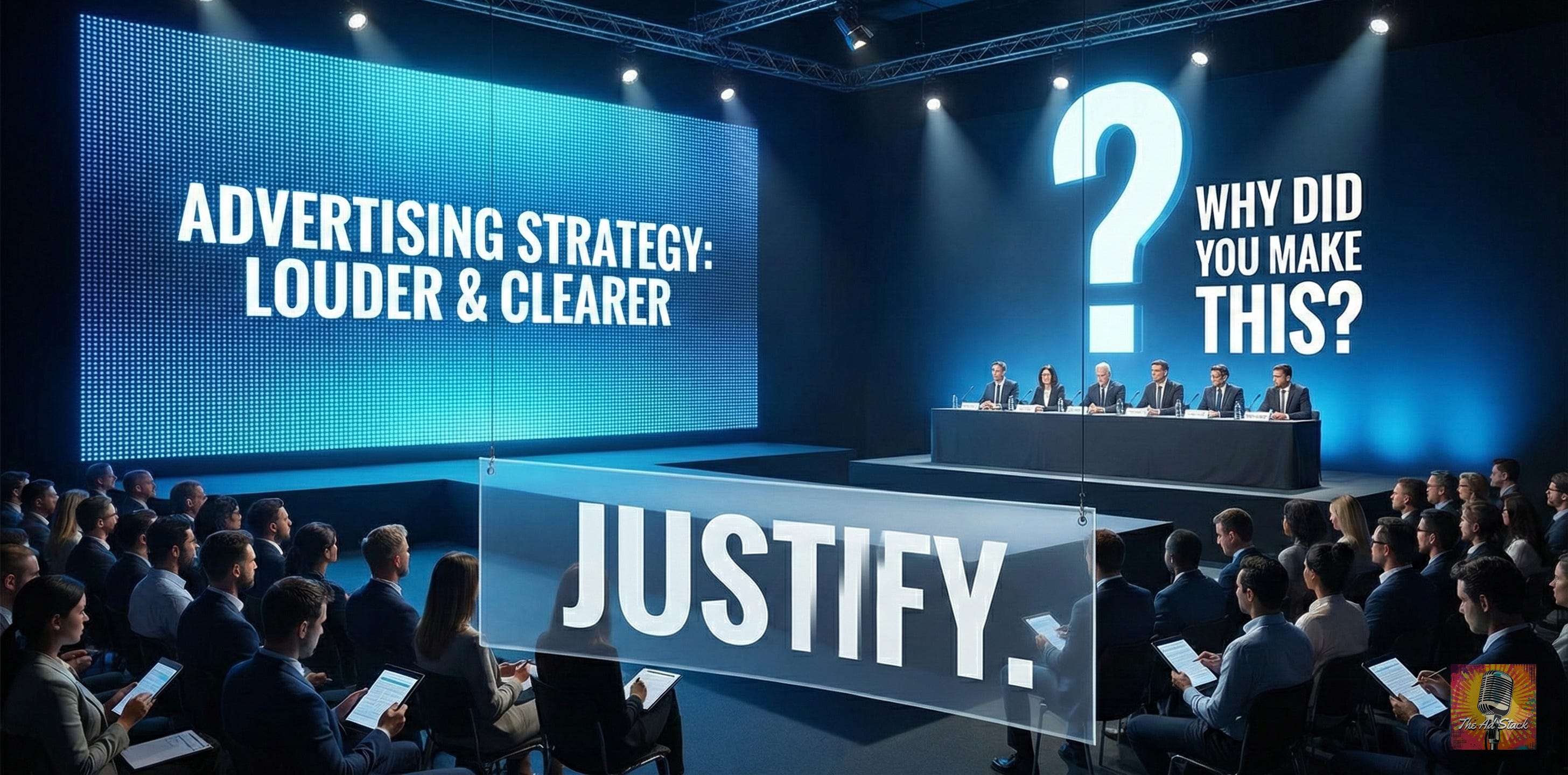
That means:
More upfront positioning debates
More alignment meetings
More frameworks
More “decision hygiene” (kill me)
Strategy teams are either thriving or drowning, no in-between.
Opinion: This is good for the industry long-term, painful in the short term, and absolutely brutal for timelines.
4. Client relationships have shifted.
Clients think they’re closer to the work
AI tools gave clients a taste of the kitchen.
Now they:
Generate their own concepts
Bring half-baked prompts to reviews
Ask why your version isn’t “more like the one ChatGPT gave us”
This has blurred the line between collaboration and interference.
Opinion: Clients don’t want to replace agencies — they want agencies to validate their prompts.
5. Trust moved from craft to systems.
Old trust: “They’re brilliant.”
New trust: “Their platform works.”
Clients now buy:
Repeatability
Speed
Predictability
They are less impressed by a single genius idea and more impressed by a system that can spit out 400 acceptable ones without drama.
Opinion: This favors holding companies and hurts boutique shops; unless boutiques lean hard into taste and POV.
6. Procurement got way bolder.
Once AI entered the room, procurement smelled blood.
“Why does this take four weeks?”
“Why does this need six people?”
“Why does this cost that much if AI helped?”
Agencies are now constantly explaining the human margin in their pricing.
Opinion: If agencies don’t reframe value around judgment, risk, and accountability, procurement will price them like software.
7. The Weirdest Part.
Everyone is pretending this is temporary
Leadership language still sounds like:
“We’re experimenting”
“We’re piloting”
“We’re learning”
Meanwhile, org charts, scopes, and P&Ls are being permanently rewritten.
Opinion: The denial phase is over. The bargaining phase is loud. Acceptance hasn’t hit yet.
8. The Big Truth Nobody Puts in Decks.
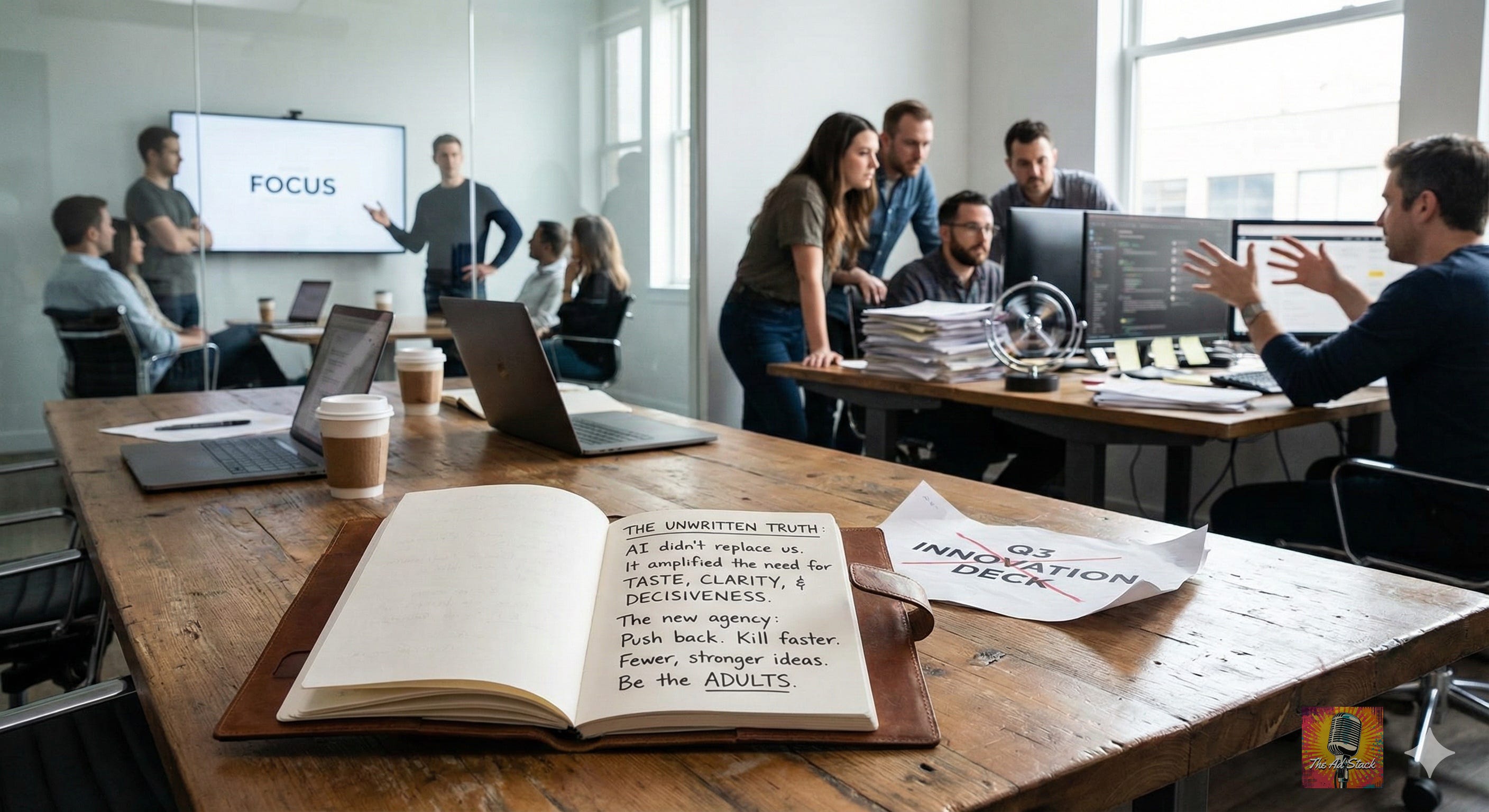
AI didn’t make agencies less important.
It made taste, clarity, and decisiveness the only things that matter.
The agencies doing well right now:
Push back
Kill work faster
Define fewer, stronger ideas
Act like adults in the room
The ones struggling:
Overproduce
Overpromise
Hide behind tools
Confuse motion with progress
Next week:
Who’s winning inside agencies
Who’s quietly screwed
What clients will demand next
This stuff gets even spicier.
Thanks for the read.
Feel free to share comments below. If you enjoyed this read, for the love of God please whack the bejabbers out of the heart icon at the top or bottom of the page so others can find this article. Re-stacking is great too.
Have a great week people!
Before you go ...

Please forward this to three randos, dorks, colleagues, or someone you met today.
Like and Re-stack it below so others can find it!
Drop a comment. If you’re into it, if it sucks … perhaps drop a Haiku about programmatic AI. Your call.