

Hi all,
It’s been a while since the last Stack. I assumed the industry would fix itself in my absence. It has not. It has become more confident. Let’s look at a few snapshots of how things things might be looking nowadays.
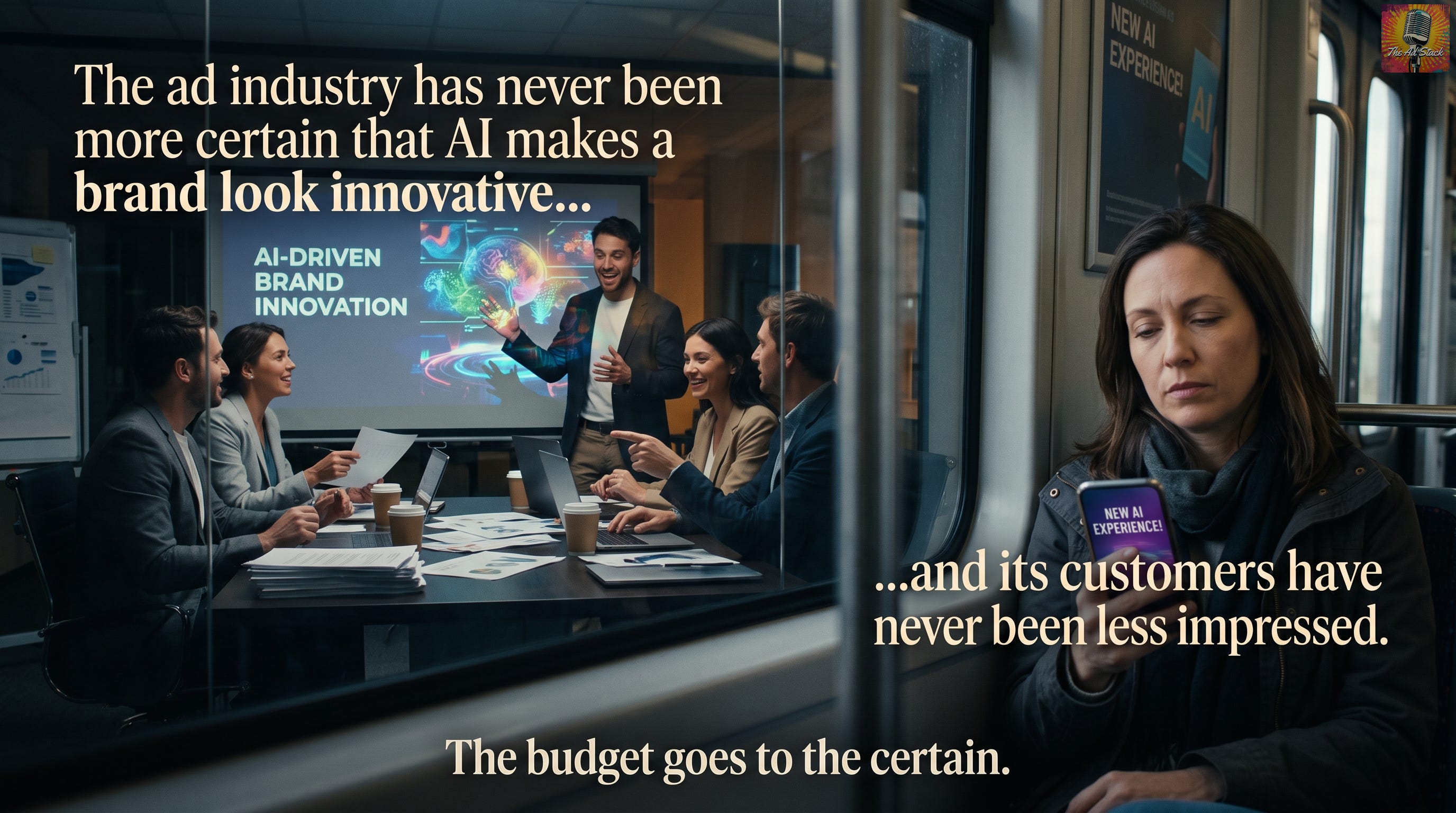
Four problems, one paragraph.
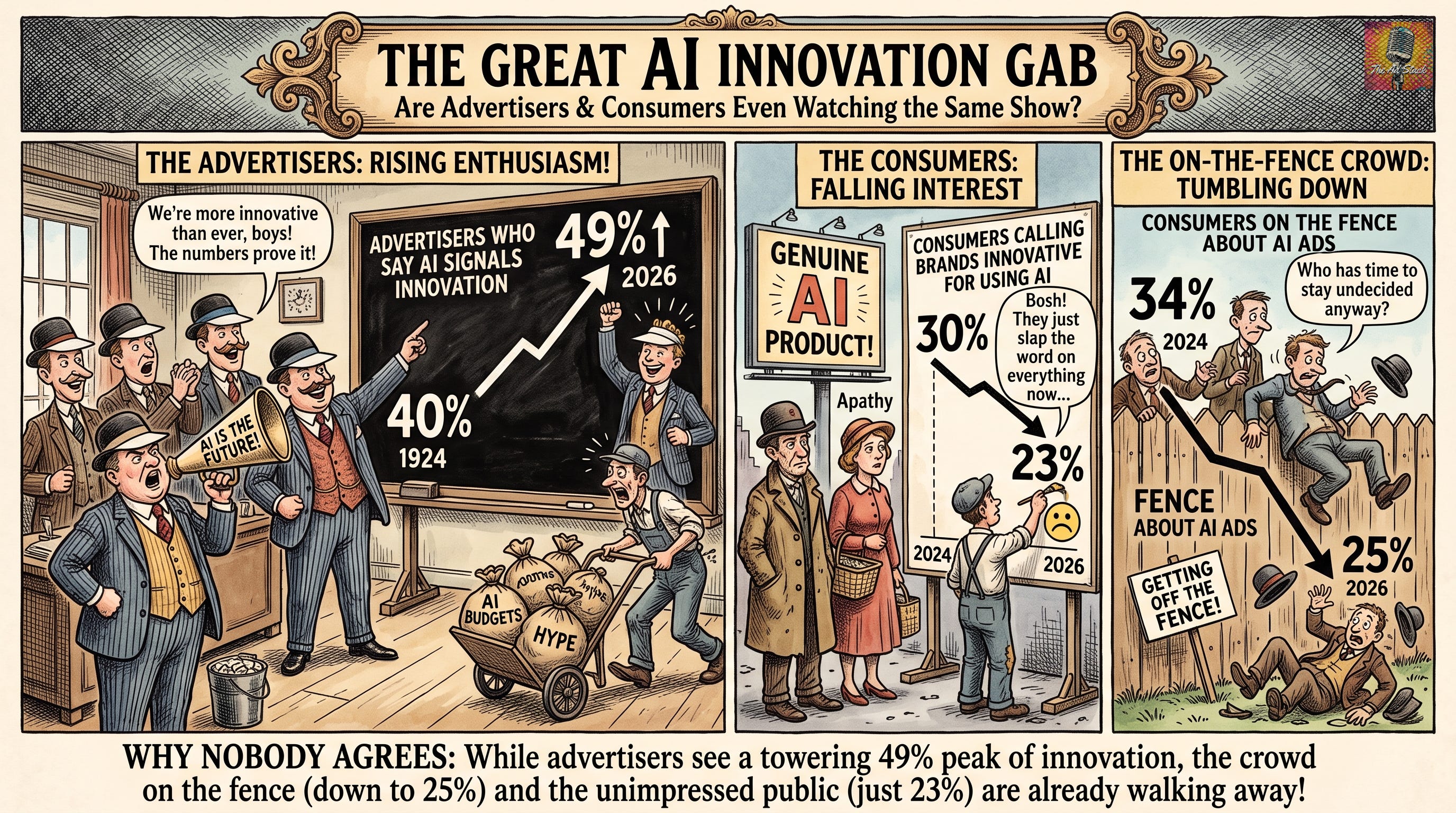
Advertisers who say AI signals innovation: 40% in 2024, 49% now. Consumers who agree: 30% then, 23% now. Consumers feeling negative about AI ads: up 12 points. The persuadable middle: 34% down to 25%, so the audience you could win is shrinking while the pitch decks are growing. And 75% of marketers plan to spend more on AI assistants that only 23% of consumers trust.
These numbers point to …
A confidence problem;
An exposure problem;
A budget problem; and
A measurement problem.
And the people holding the checkbook have diagnosed none of them. Receipts follow.
1. Nine Up, Seven Down: A Love Story
IAB, the industry’s own trade body, surveyed Gen Z and Millennial consumers next to ad executives between October 2025 and January 2026. It’s titled the resulting “The AI Ad Gap Widens.”

Read the arrows. The only one pointing up belongs to the people selling it.
For those preferring engaging infographics and cartoons, the above might be interpreted as …
2. Familiarity Breeds Contempt, Now in Chart Form
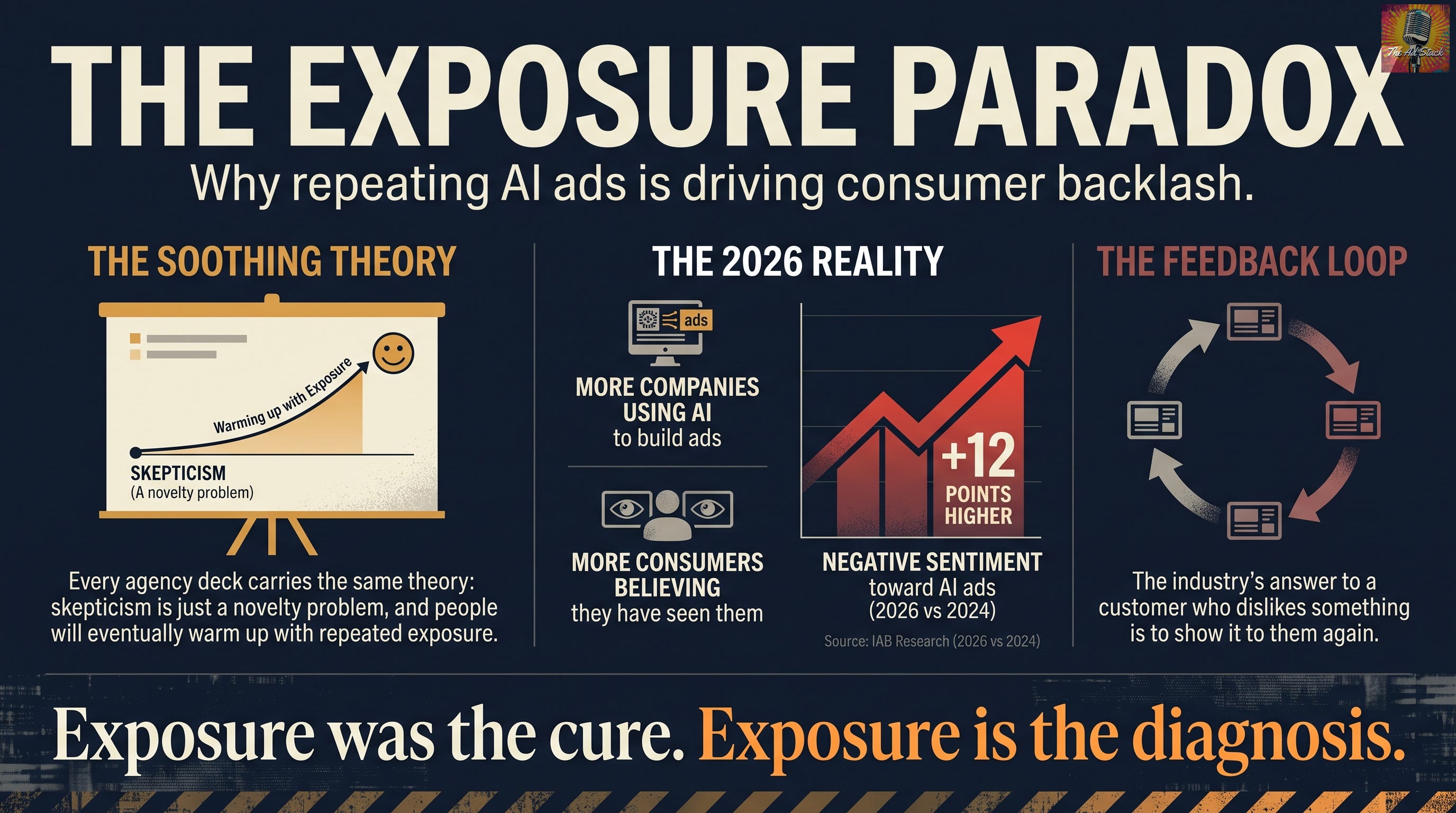
Every agency deck carries the same soothing theory: skepticism is a novelty problem, and people warm up with exposure. IAB’s 2026 numbers show more companies using AI to build ads, more consumers believing they have seen them, and negative sentiment 12 points higher than in 2024. The industry’s answer to a customer who dislikes something is to show it to them again.
Exposure was the cure. Exposure is the diagnosis.
3. The Money Left the Building. Trust Is Still Looking for Its Keys.
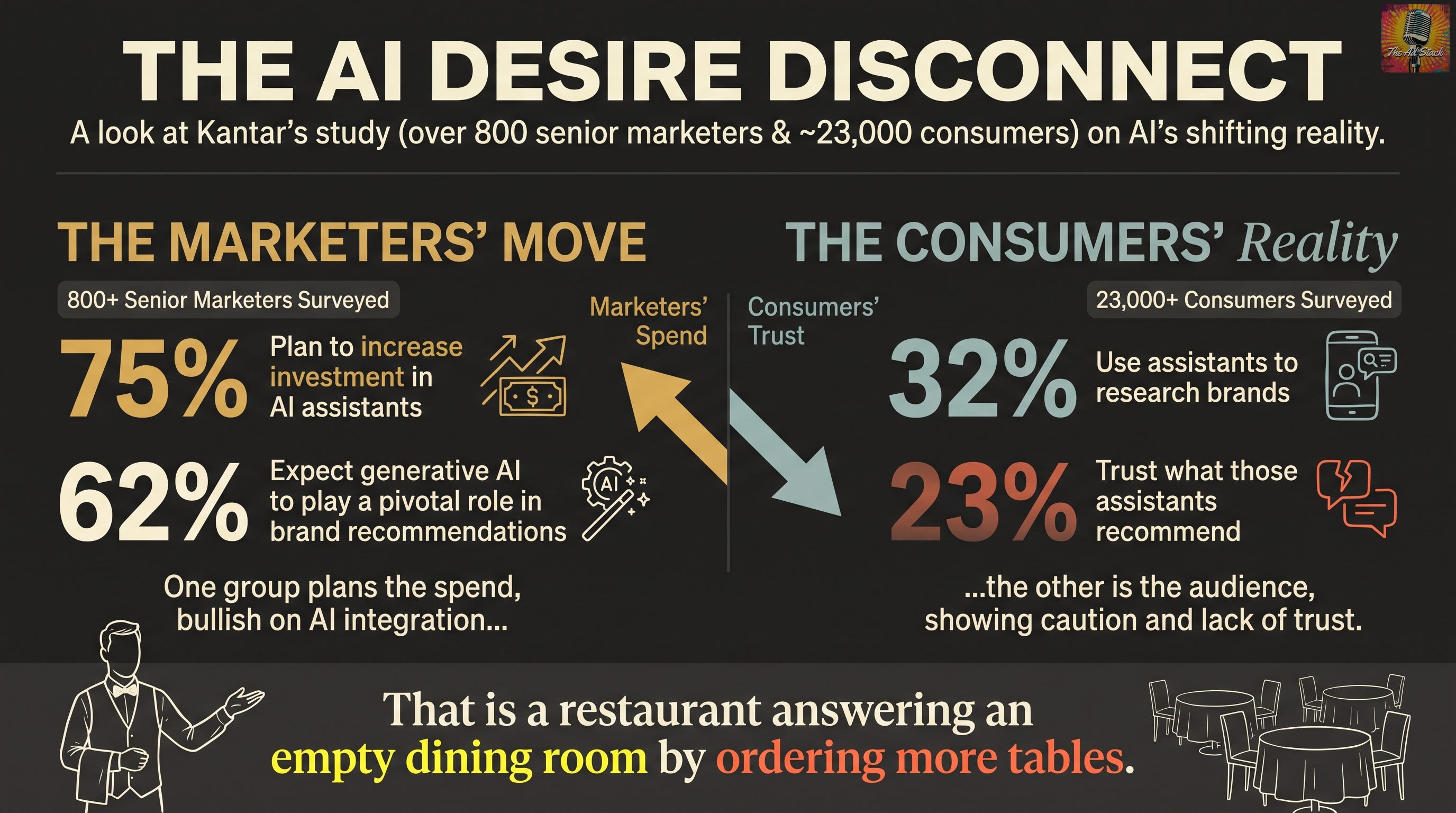
Kantar’s Media Reactions study, reported October 2, interviewed more than 800 senior marketers and about 23,000 consumers. One group plans the spend. The other is the audience, and its answers sit in the same report. Seventy-five percent of the marketers plan to increase investment in AI assistants. Sixty-two percent expect generative AI to play a pivotal role in brand recommendations. Thirty-two percent of consumers use assistants to research brands.
Twenty-three percent trust what those assistants recommend.
That is a restaurant answering an empty dining room by ordering more tables. Yes, 23% also appeared in the IAB data, for a different question in a different survey. The universe is not subtle.
4. The Waiting Room Everyone Mistook for a Mall
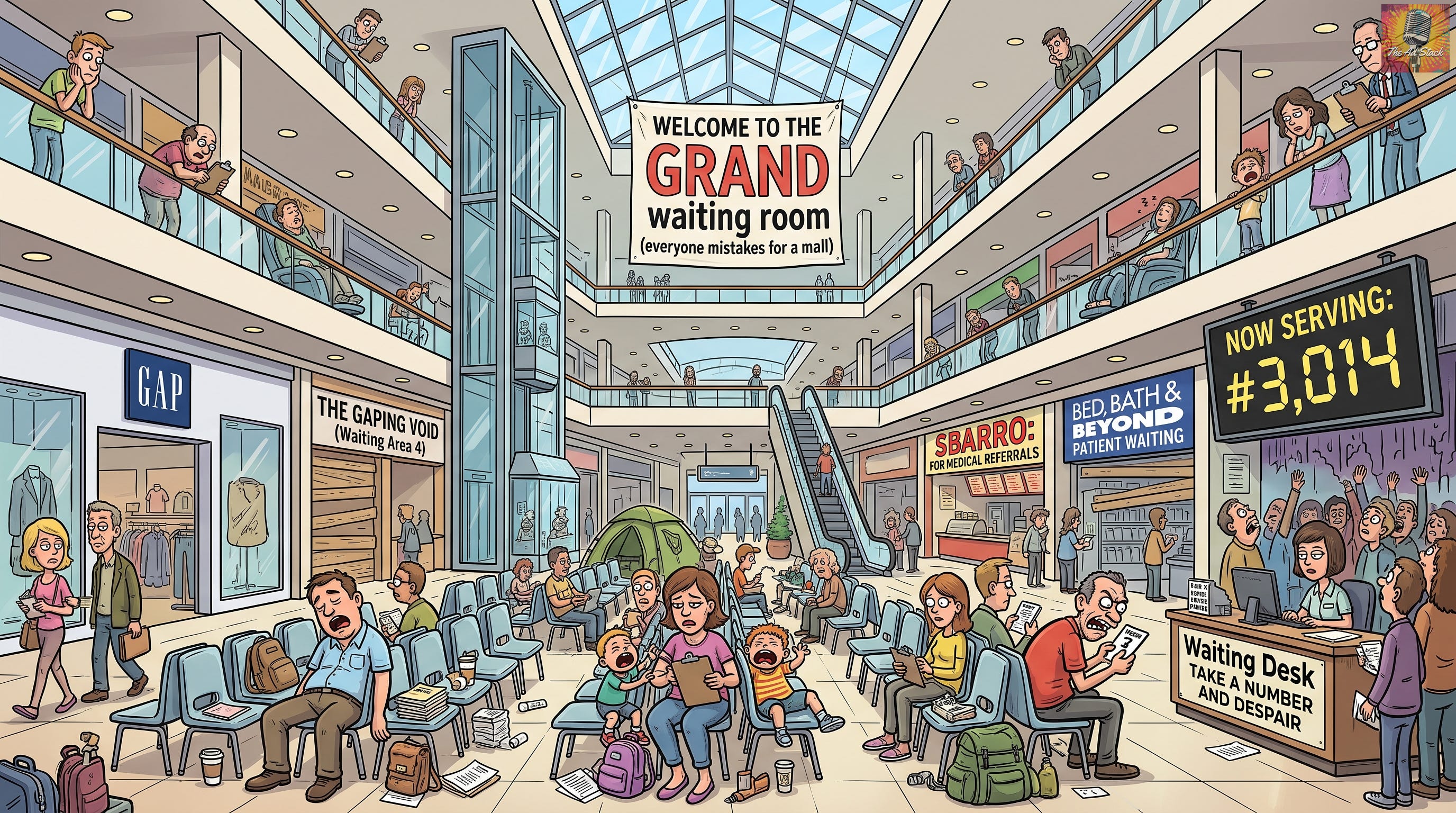
In January we flagged a DEJAN research finding that roughly 65% of AI chatbot users do not plan to buy anything in connection with an AI conversation. ChatGPT alone has about 810 million monthly users. The ad industry looked at the largest attention pool in digital media and saw shoppers.
It is not a showroom. It is the returns desk.
5. Perplexity Tried It and Quit
Perplexity tested sponsored answers starting in late 2024, then wound the format down through 2025 and early 2026. An executive reportedly explained the retreat in one sentence: “A user would simply start to doubt everything.” That is the whole business risk, stated by the one company that ran the experiment in production. OpenAI is running it anyway, with ads kept visibly separate from answers on the free tier. Maybe the separation works.
Maybe the public is the control group.
6. Why Nobody Fixes It: The Invoice Beats the Customer to the Door
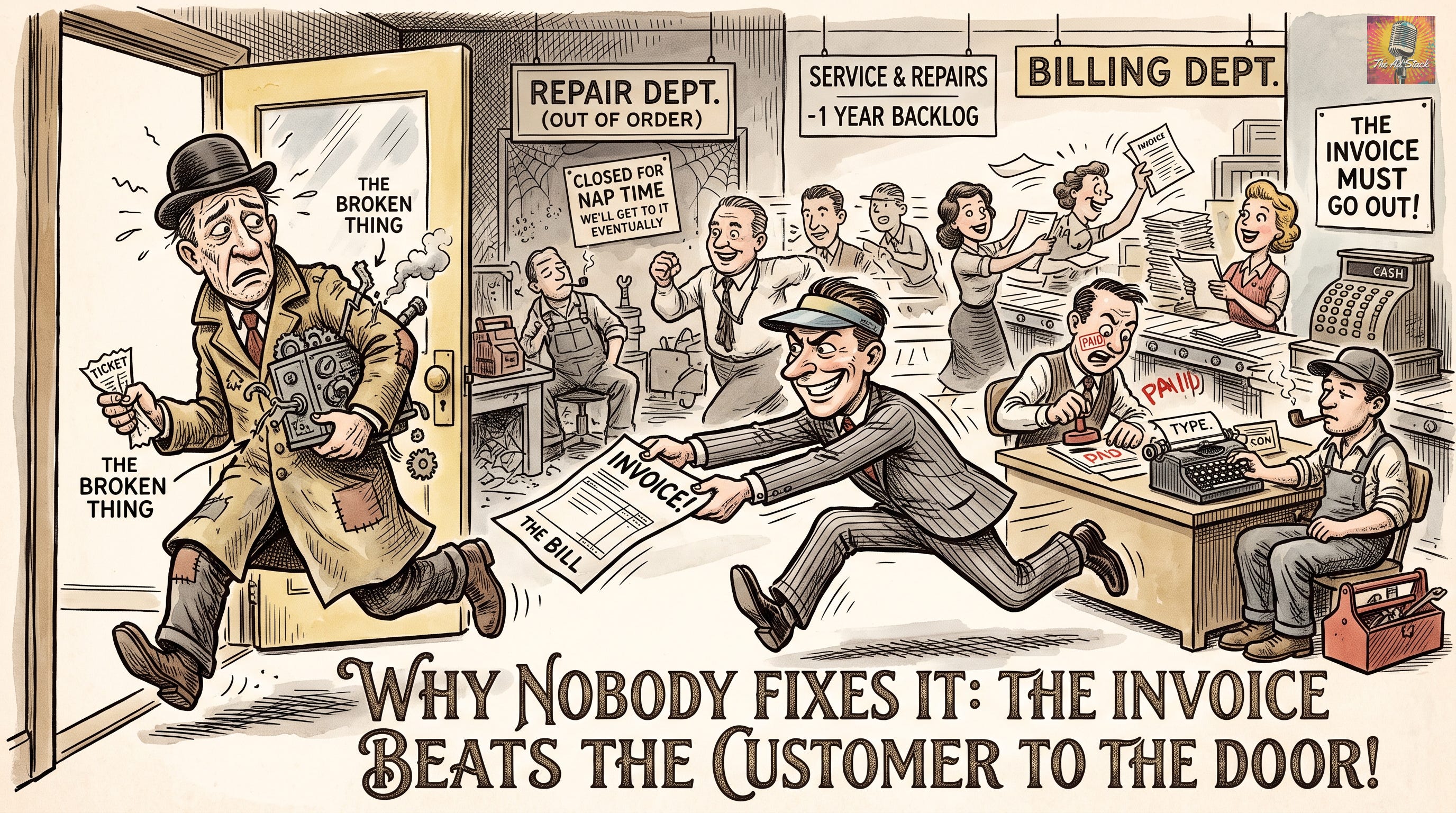
Our theory, not IAB’s. The savings show up this quarter, as invoices and faster turnarounds. A customer quietly downgrading a brand shows up later, scattered, with no name attached. One has a line item. The other has a vibe. Holding company earnings calls run on quarters. Brand equity does not.
The line item wins every budget meeting.
7. They Can’t Price the Input or Read the Output
We covered the pricing side in the token piece. IAB Europe’s chief economist, Daniel Knapp, put it in one sentence: “No one knows how to price that in yet.” The industry cannot price what goes into AI work and has not read what comes out of the customer.
At the Digiday Publishing Summit, attendees wrote prompts for AI seller agents to negotiate with an AI buyer agent holding a $400,000 budget. Humans typing so machines could haggle with a machine.
The setup, as described, had a buyer, a seller and a budget. No customer.
8. Gucci Labeled It. The Internet Labeled It Back.

IAB also found that many consumers said knowing an ad was AI-made would raise their likelihood to buy. Disclosure evangelists, enjoy it briefly. Survey intent flatters real behavior, famously. Gucci captioned its AI images “Created with AI” in February, and commenters called them “slop.”
The label did what labels do. It made the thing easier to identify.
9. The Three-Day Test
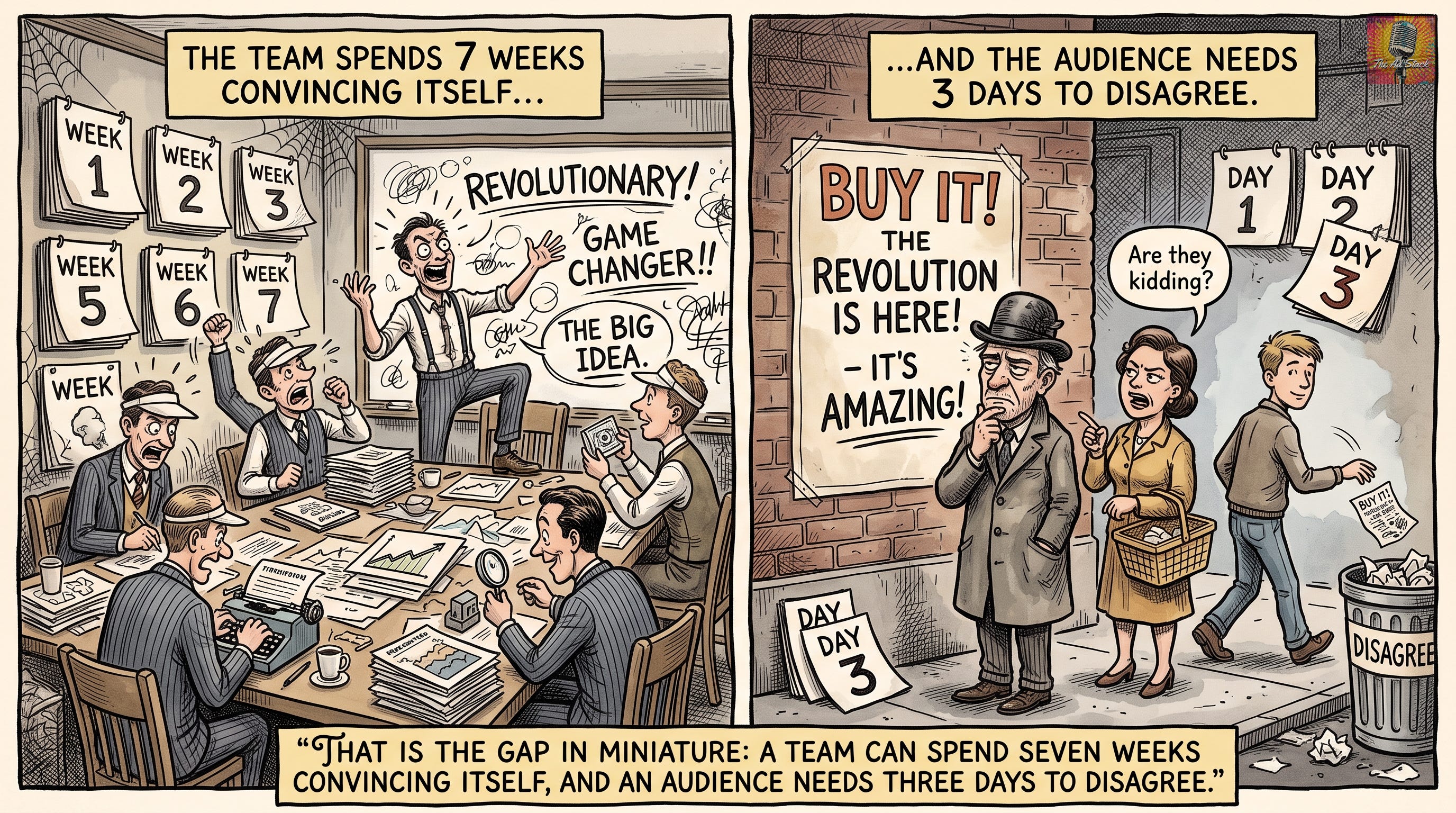
McDonald’s Netherlands, as we covered in January: seven weeks, ten people, thousands of takes, pulled after three days. The production house’s defense was “This wasn’t an AI trick. It was a film.” The customers’ verdict arrived first.
This is the gap in microcosm: a team can spend seven weeks convincing itself, and an audience needs three days to disagree.
10. Monday Morning: Three Questions for Whoever Owns the Budget
Where is the consumer evidence behind every “AI signals innovation” slide? Advertiser belief is not evidence.
Does disclosed creative beat undisclosed creative with your audience, not the industry’s?
Is sentiment tracked beside efficiency? A cost per asset that falls while brand perception falls is not a saving. It is a deferred bill.
The customers already filed their response. The industry is still drafting a press release about how innovative it feels.
Forward this to whoever owns your AI budget. Whack the bejabbers out of that share button.
Thanks for Stacking.
Sourcing notes.
The 2024 and 2026 percentages, the 12-point sentiment shift and the disclosure finding come from IAB, The AI Ad Gap Widens, fielded October 2025 through January 2026.
The Kantar figures are from its Media Reactions study as reported by CMO Tech on October 2, 2026.
The Gucci caption and reaction are from Jing Daily and BBC reporting syndicated by AOL, February 2026.
The DEJAN figure is from our January piece on the 2026 sobering-up, and the McDonald’s details are from our January coverage.
The Perplexity quote and timeline are from Folkfox, and the Knapp quote is from Digiday.
The Digiday Publishing Summit workshop is from Digiday’s event recap. The press release in section 10 is fabricated for the bit, as are the restaurant and waiting-room similes.